GRAPHIC DESIGN
//
UX-UI

Context
Academic project
Role
Graphic & UX/UI Designer
Problem
Most social platforms prioritize visual content, making it harder for users to discover meaningful discussions and knowledge-based communities.
The challenge was to design a platform where written content remained the main focus, creating a clear visual identity and interface that encouraged reading, contribution, and community participation.
Process
Analyzed existing social platforms and text-based communities to understand content trends, user expectations, and opportunities for a more discussion-focused experience.
Defined the core principles of the platform: prioritizing writing over imagery, organizing thematic communities, and encouraging collective knowledge sharing.
These insights shaped a visual direction inspired by editorial design and newspaper layouts, creating a more intentional text-first experience.
Created the complete visual identity system, including logo, color palette, typography, and graphic language.
The design approach focused on balancing personality and clarity, creating a recognizable identity while keeping user-generated content as the main focus.
Designed the interface structure with emphasis on readability, hierarchy, and intuitive navigation.
Created layouts that support long-form content consumption and allow users to move naturally between different communities and discussions.
Delivered high-fidelity screens, visual identity assets, and a complete design system ready for development.
Prepared the final presentation and documentation explaining the concept, design rationale, and key decisions behind the experience.
Solution
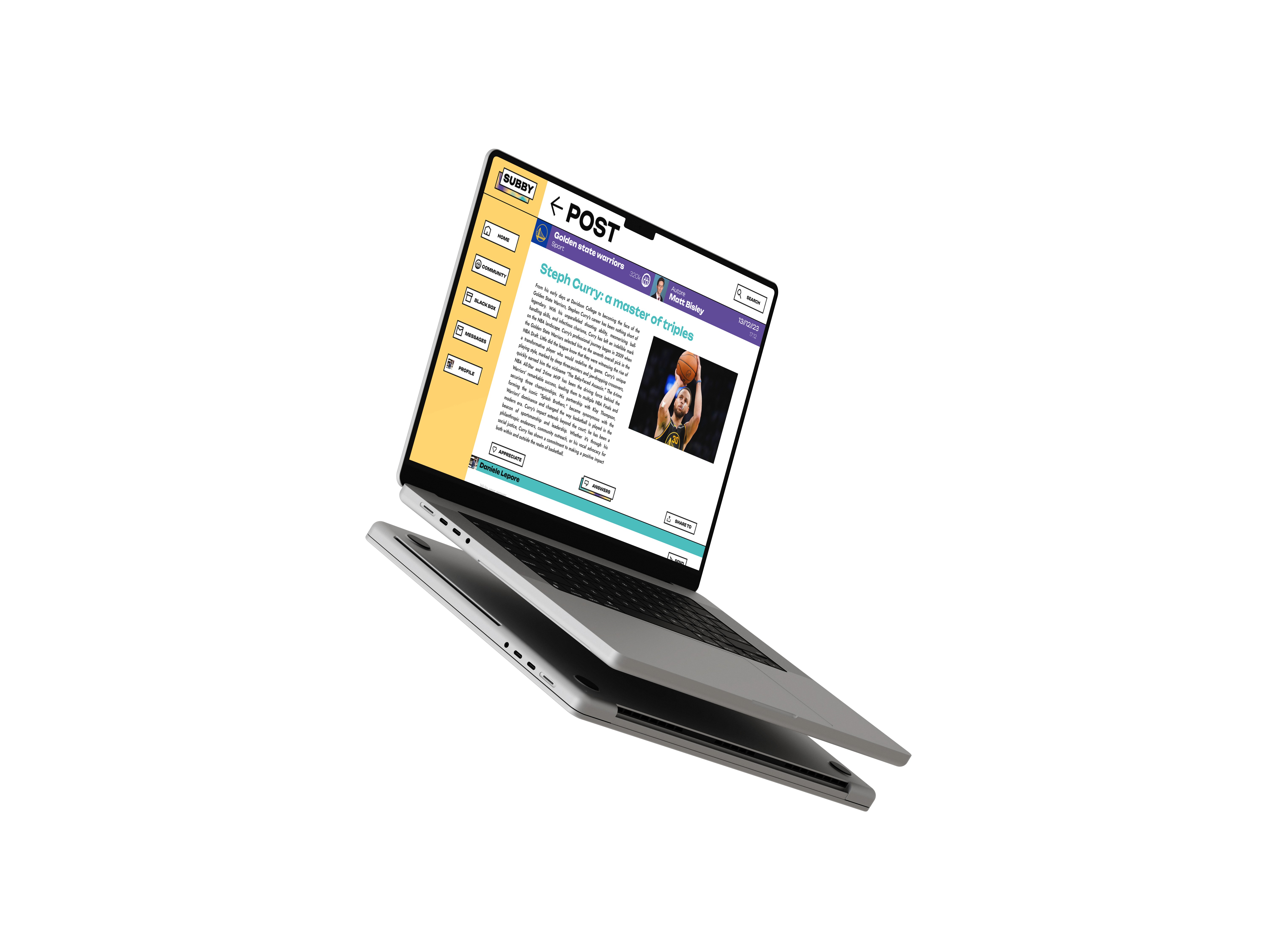
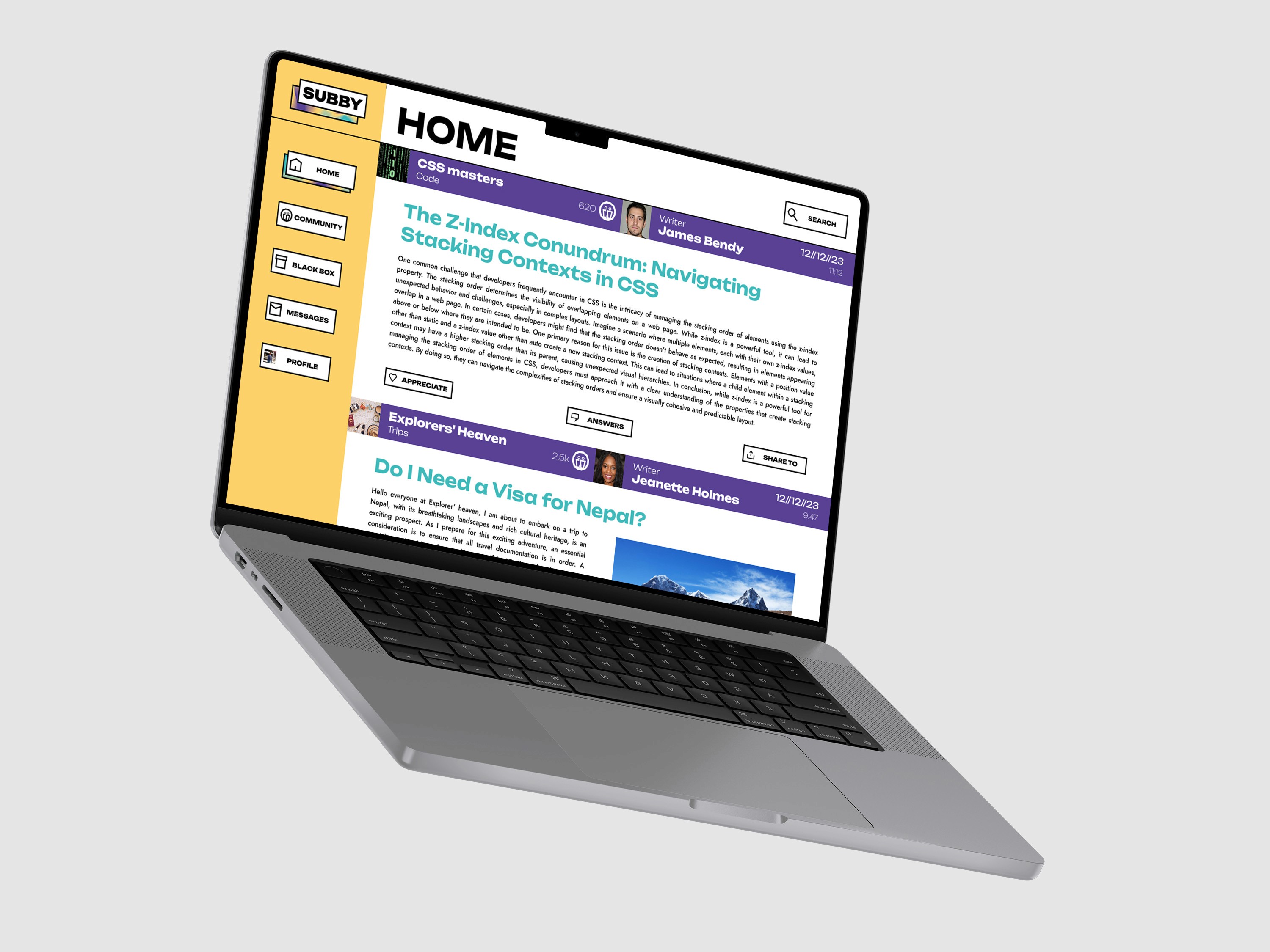
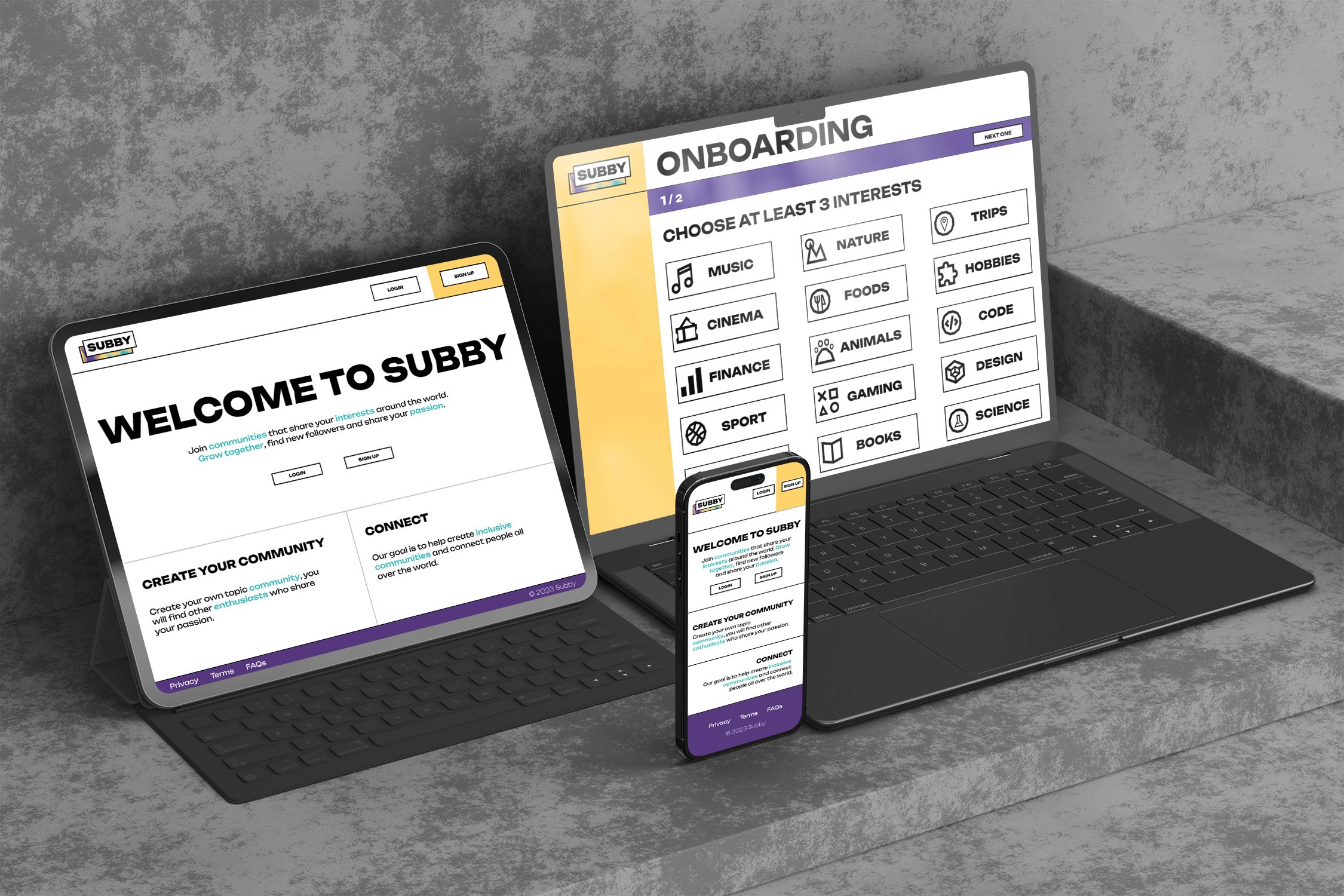
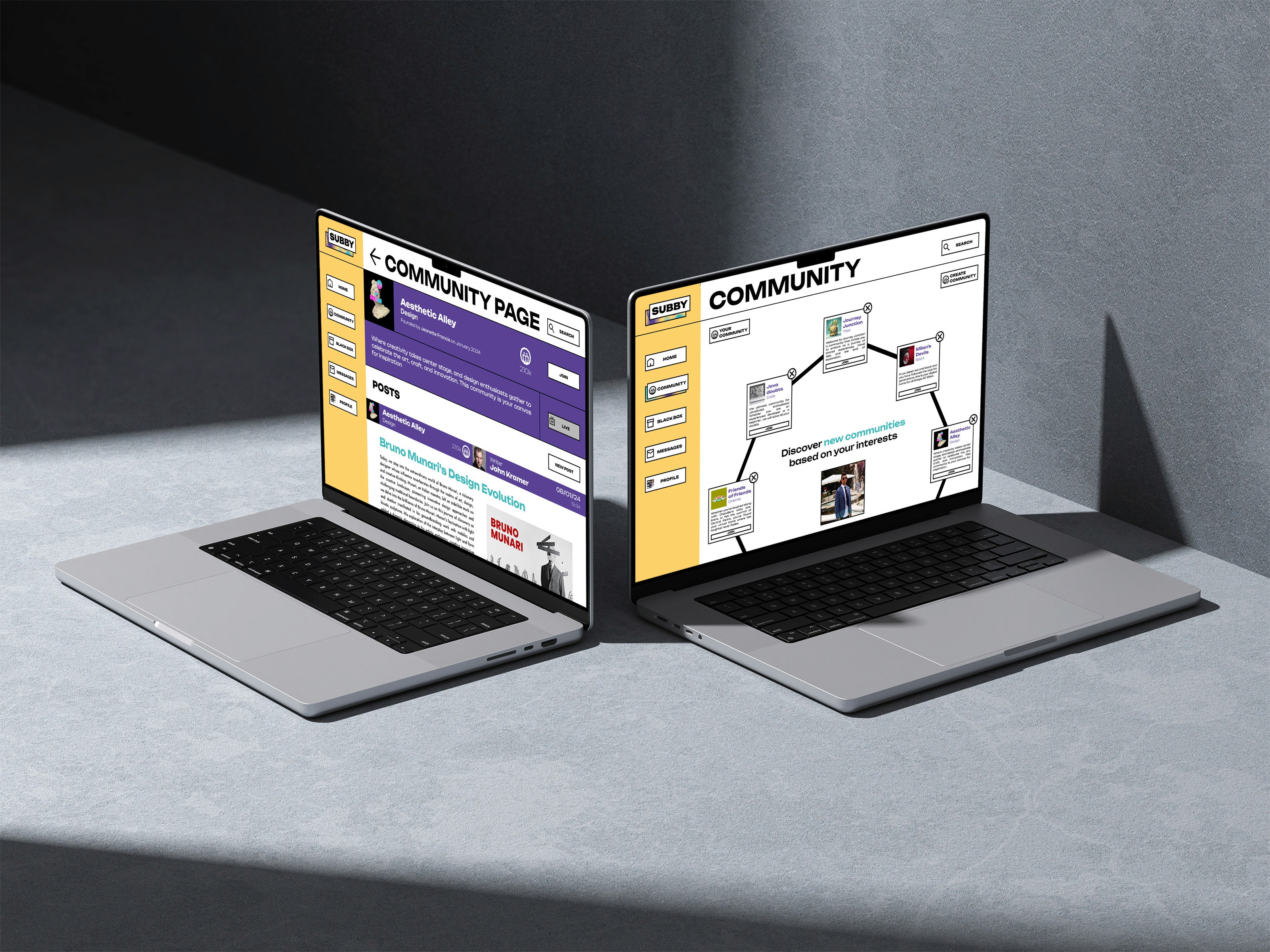
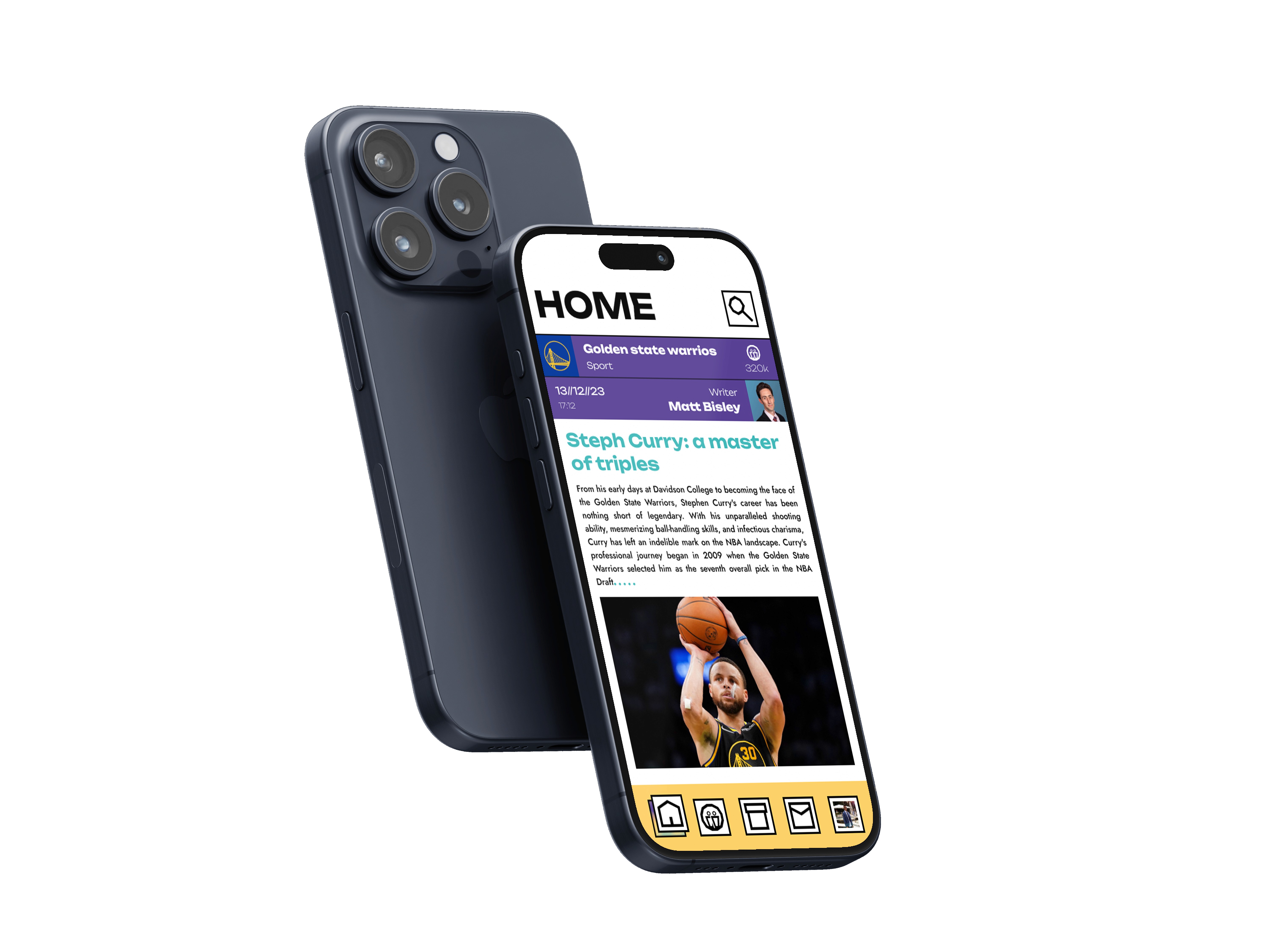
These mockups showcase Subby’s newspaper-inspired visual identity and interface, designed to prioritize written content and community interaction.
The final experience combines editorial principles with digital interaction patterns, creating a platform where typography, hierarchy, and structure support meaningful discussions.
Reflections
Subby strengthened my understanding of designing around content rather than visual elements. Typography, spacing, and hierarchy became essential tools to improve readability and encourage engagement.
Creating a strong visual identity while keeping user-generated content central required finding the right balance between brand expression and interface neutrality.
Designing thematic communities highlighted the importance of clear organization and navigation patterns when users need to explore multiple content spaces.
Without extensive user testing, internal critique and iteration became essential. This process improved my ability to evaluate design decisions and refine solutions systematically.
" height="21px" id="hQkO5vczd" transform="translate(2 5)" width="22px"/></svg>)
Contact
Interested in working together or discussing a project? Feel free to get in touch - I’d be happy to connect.
©danielelepore